The Origin of the 5-Pocket Jeans: A Deep Dive into Watch Pockets, Coin Pockets, and Rivet Construction
From the patent acquisition in 1873 to the present day, historians unravel the evolution and cultural impact of 5-pocket jeans.
by editorial
This article contains affiliate links. We may earn a commission at no extra cost to you.
The Origin of the 5-Pocket Jeans: A Deep Dive into Watch Pockets, Coin Pockets, and Rivet Construction
1. Introduction — The Significance of This Topic
Today, denim pants, particularly “5-pocket jeans,” loved by people worldwide, have transcended mere clothing to become cultural icons. Their universal design has maintained its basic structure for over 150 years since its inception. How did this remarkably durable and enduring design come to be, and how has it evolved? As a denim historian, this article focuses on the origins of 5-pocket jeans, delving into the transformation of their iconic features – the watch pocket, coin pocket, and rivet construction – from multifaceted perspectives including historical context, technological innovation, and cultural impact. This exploration will not only unravel the history of jeans but also illuminate how the practical needs of laborers were elevated into timeless fashion.
Shop the items featured in this article
【今だけ2%OFFセール】【日本製】リーバイス ビンテージ クロージング LEVI'S VINTAGE CLOTHING 501XX 1955モデル ジーンズ…View on Rakuten → 【今だけ2%OFFセール】【日本製】リーバイス ビンテージ クロージング LEVI'S VINTAGE CLOTHING 501 1937モデル 501XX…View on Rakuten →2. Historical Background — Social and Economic Context
The birth of 5-pocket jeans is deeply intertwined with the tumultuous era of the late 19th century in America. The Westward Expansion, the Gold Rush, and the progress of the Industrial Revolution gave rise to a large working-class population. These laborers, including miners, railroad workers, and farmhands, required durable clothing that could withstand harsh conditions. It was against this backdrop that Jacob Davis, a tailor from Canada, and Levi Strauss, a wholesale merchant from San Francisco, obtained a patent (No. 139,121) in 1873 for “Waist Overalls,” the direct ancestor of modern jeans, reinforced with rivets.
This patent perfectly met the market’s demand at a time when the need for durable workwear was surging. Initially, “Waist Overalls” prioritized functionality as work clothes, and their design incorporated ingenious features to withstand daily rigorous use. Over time, due to their practicality and durability, these work pants became widely favored not only by laborers but also by professionals such as cowboys and railroad engineers, eventually symbolizing the spirit of the American frontier and pioneering.
3. Chronological Development — Key Events in Order
The development of 5-pocket jeans was shaped through several significant milestones:
- 1873: Jacob Davis and Levi Strauss acquire a patent for rivet-reinforced work pants, which become the direct ancestor of modern jeans. They were initially called “Waist Overalls.”
- Late 19th Century - Early 20th Century: While the exact establishment of the 5-pocket concept is unclear, early work pants are believed to have featured two front pockets, one back pocket, and a small pocket for a pocket watch (watch pocket).
- 1889: The Lee Motor Clothing Company, later known as Lee, is founded.
- 1890s: Levi Strauss & Co. introduces lot number “501,” the direct root of the legendary “501” jeans.
- Early 1900s: It is presumed that the standard 5-pocket configuration was established in jeans.
- 1915 onwards: Levi Strauss & Co. deepens its relationship with White Oak Mill, a supplier of high-quality denim fabric at the time. This mill continued to supply denim for Levi’s jeans until 2017.
- 1924: Lee introduces the cowboy pants “101.”
- 1925: Lee replaces back pocket rivets with bar tacks (X-tack), a significant turning point in future jean design.
- 1926-1927 (Lee’s own Facebook cites 1927; sources differ): Lee releases the “101Z,” featuring a zip fly.
- 1937: Levi Strauss & Co. adopts “Hidden Rivets,” where the back pocket rivets are covered with fabric, a measure intended to prevent damage to saddles.
- 1947: Blue Bell launches the Wrangler brand’s “13MWZ Cowboy Cut,” injecting new vitality into the jeans market.
- 1950s: Film stars like Marlon Brando and James Dean wear jeans, elevating them from workwear to fashion items.
- 1955: Levi Strauss & Co. begins usingジャクロン (Jacron) paper patches, replacing the traditional leather patch.
- 1964: Wrangler adopts “Broken Twill,” a unique weaving technique, for its denim.
- 1966: Levi Strauss & Co. eliminates hidden rivets and adopts bar tacks (X-tack), nearly establishing the modern pocket structure of 5-pocket jeans.
4. Technical Aspects — Manufacturing, Materials, and Innovations
The establishment of the universal design of 5-pocket jeans involved numerous technological innovations in materials, dyeing, and hardware.
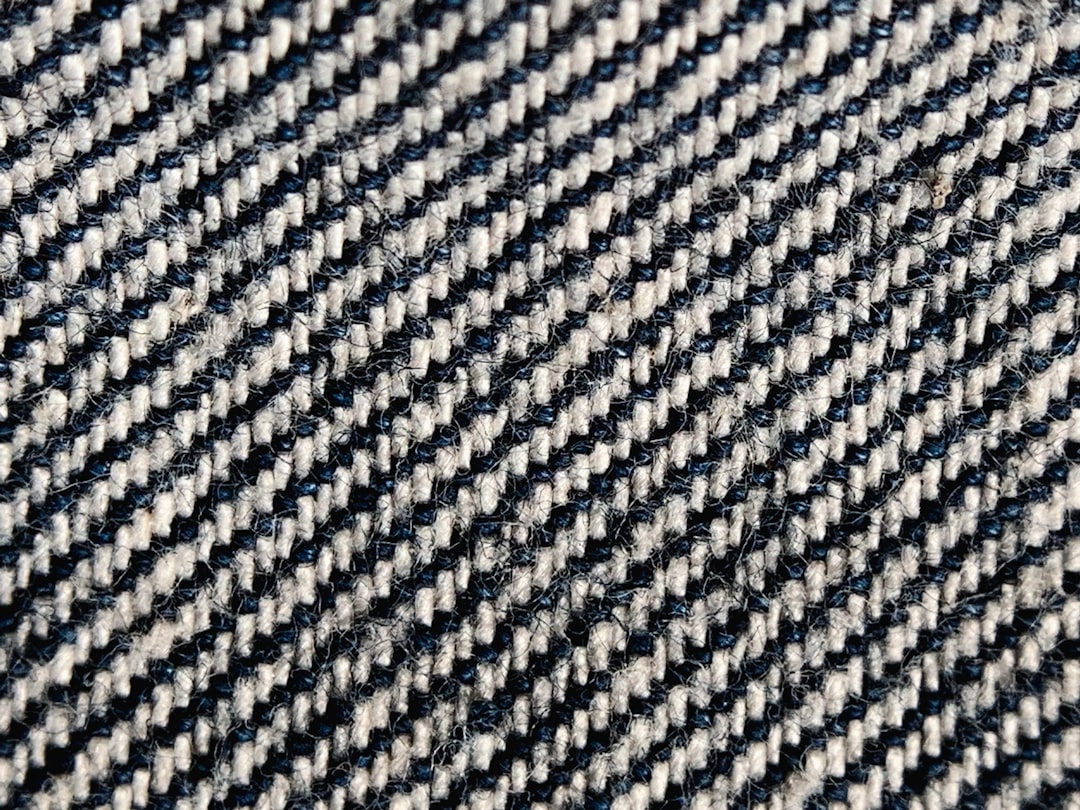
- Fabric: The backbone of jeans is durable twill-woven denim fabric. “3x1 twill” is common, with both Right-Hand Twill (RHT) and Left-Hand Twill (LHT) existing. Levi’s primarily used RHT, while Lee was characterized by LHT. Wrangler, from 1964 onwards, introduced “Broken Twill,” which alternates the direction of yarn twist to prevent fabric twisting.
- Dyes: Indigo Dye, the lifeblood of denim, uses the “Rope Dyeing” technique. This method dyes only the surface of the yarn, not the core, creating unique fading effects with wear.
- Hardware:
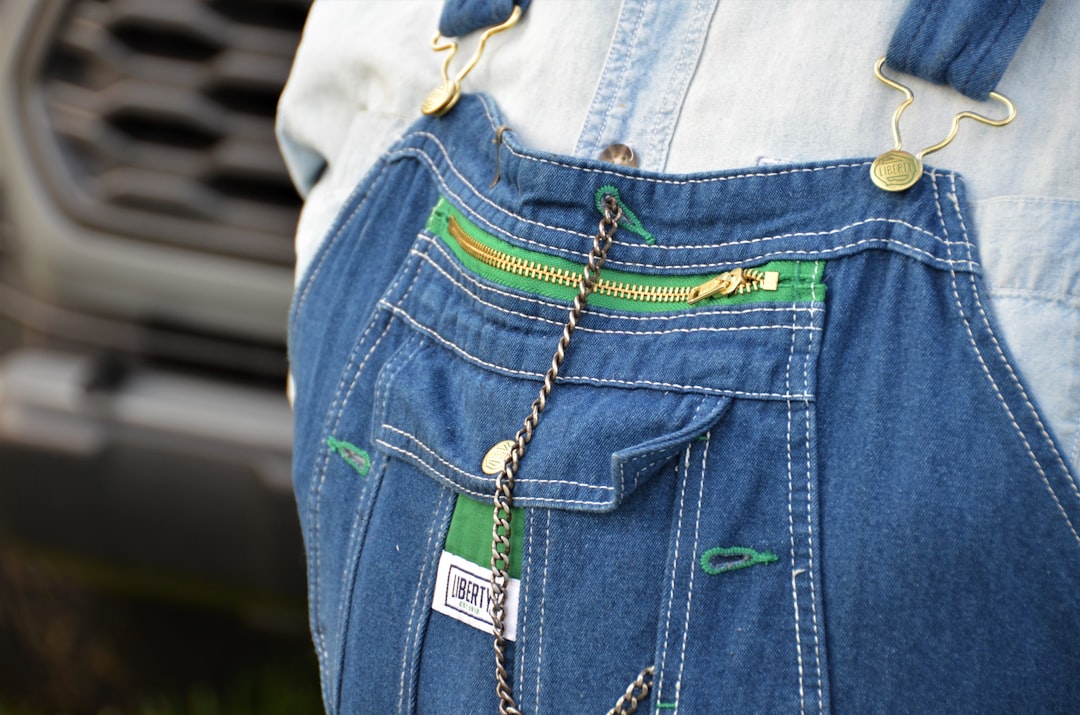
- Rivets: Since the 1873 patent, copper rivets have been used at the corners of pockets, especially in areas subject to stress, serving as an innovative reinforcement method to prevent fabric tearing. While initially exposed, rivets became “Hidden Rivets” around 1937 to prevent saddle scratches and transitioned to “Bar Tacks” after 1966. Lee adopted bar tacks as early as 1925, a more progressive move than Levi’s adoption of hidden rivets in 1937. Wrangler, from the launch of the “13MWZ” in 1947, has used “Scratchless Rivets” intended to protect saddles.
- Buttons and Zippers: Button fly was the mainstream, but around 1926-1927 (sources differ) Lee introduced the zip fly with the “101Z.” Levi’s also began adopting zip flies in models like the “501Z” from 1954.
- Patches: The leather patch adopted by Levi’s around 1886 was replaced byジャクロン (Jacron) paper patches around 1955. Lee also began using paper patches in the 1950s.
5. Cultural Impact — Connections with Fashion, Music, and Film
Born as workwear, jeans gradually established their position as fashion items in the 20th century due to their practicality and design. Particularly after World War I and World War II, soldiers wore jeans, which then spread into youth culture post-war.
- Film: Hollywood films in the 1950s portrayed jeans as symbols of rebellion and freedom. Marlon Brando wearing Levi’s 501s in “The Wild One” (1953) and James Dean wearing Lee 101Zs in “Rebel Without a Cause” (1955) were major factors in elevating jeans to a coveted fashion item for young people. Steve McQueen’s Levi’s 501s in “Bullitt” (1968) also became an icon of subsequent jean styles.
- Music: Jeans became a de facto uniform in subcultures like rock and roll, cowboy, and biker scenes. Numerous musicians, including Elvis Presley, favored jeans, further broadening their appeal.
- Counterculture: Jeans became a symbol of self-expression for rebellious youth, playing a crucial role in counterculture across fashion, music, and lifestyle.
6. Influence on Today — Connecting to Today’s Denim Culture
Even after more than 150 years, the design of 5-pocket jeans maintains its basic shape. This signifies that the practicality and functionality pursued in the late 19th century resulted in a timeless, universal design.
Today’s denim culture encompasses a reverence for vintage jeans, the enjoyment of “growing” denim, and the evolution of each brand while inheriting its unique history and technology. The fact that early details such as the presence or absence of rivets, hidden rivets, and the use of selvedge denim are highly valued in the vintage market is a testament to the historical value of 5-pocket jeans.
Iconic models like Levi’s “501,” Lee’s “101” series, and Wrangler’s “13MWZ” each possess their own history and individuality while continuing to be loved by many today. These jeans are not merely clothing; they are living heritage deeply intertwined with American history, culture, and people’s lifestyles. This timeless design will continue to be a part of our daily lives and evolve.
7. Conclusion
The origin of 5-pocket jeans began with the need for practical workwear in late 19th-century America. The patent acquisition by Jacob Davis and Levi Strauss for rivet construction dramatically improved their durability, making it an indispensable element in the birth of jeans. Early pocket configurations, such as the watch pocket and coin pocket, were practical innovations for carrying pocket watches and small change at the time.
Over time, the back pocket rivet structure evolved into “hidden rivets” and “bar tacks,” and jeans transitioned from workwear to fashion items. Their connection with popular culture, including film and music, propelled jeans to global icon status.
Today, 5-pocket jeans, with their universal design and historically rooted stories, continue to be loved across generations. Every detail of their construction, materials, and features embodies over 150 years of innovation and cultural evolution. This enduring design will undoubtedly continue to accompany us in our daily lives and evolve.
Find Related Items
You can browse the models and items featured in this article at the stores below.
Related Articles

The Osaka Five and Replica Jeans: A Genealogy of the Vintage Reproduction Movement, 1979-2000
Unraveling the history of vintage replica jeans by the 'Osaka Five,' who revolutionized the Japanese denim scene from the late 1970s to the early 2000s.
From 'Big E' to 'small e': Why the 1971 Levi's Tab Transition is Crucial for Dating Vintage Jeans
Explore the iconic 'Big E' and 'small e' on Levi's Red Tabs. This article delves into the historical context and technical aspects that make this symbolic shift in 1971 a definitive marker for identifying vintage jeans.
The Revolution of Non-Shrinking Denim: Sanford Cluett's Sanforized Process (Invented 1928 / Patented 1932)
The Sanforized process revolutionized denim by solving the problem of shrinkage, contributing to the widespread popularity of jeans as fashion items. This article traces the history from its invention to its adoption.