Levi's 501XX: A Deep Dive into the Origin and Pinnacle of Denim
The Levi's 501XX shines brilliantly in the history of denim. From its origins and construction to its cultural impact and value in the vintage market, we conduct a thorough dissection of denim's origin and pinnacle.
by editorial
This article contains affiliate links. We may earn a commission at no extra cost to you.
Levi’s 501XX: A Deep Dive into the Origin and Pinnacle of Denim
The cultural impact of denim as a material and “jeans” as an item on modern society is immeasurable. Among them, the Levi’s 501XX stands as more than just an article of clothing; it is a historical legacy. It represents the “origin” of the concept of jeans, and despite countless imitations and evolutions, it continues to reign as the “pinnacle.” From the perspective of a denim historian, this article will thoroughly dissect this legendary pair and unravel its timeless appeal.
1. Introduction — Why This Item Holds Cultural Significance
The cultural significance of the Levi’s 501XX lies in its unshakeable historical background and its universal appeal that has endured through generations. From the birth of riveted waist overalls in 1873, jeans established their status as “workwear” capable of withstanding harsh working conditions. However, with the 501XX, particularly the “XX” signifying the highest quality denim fabric, and through its subsequent evolution, it transformed from a worker’s uniform into a symbol of rebellion and then a fashion item.
Hollywood films of the 1950s — most decisively Marlon Brando wearing the 501 in “The Wild One” (1953) — established jeans as a symbol of tough, cool masculinity. James Dean’s “Rebel Without a Cause” (1955) is often grouped with the same cultural moment, but denim historians have documented that Dean himself wore Lee 101Z Riders, not Levi’s, on screen; more than 400 pairs of Levi’s were nevertheless dressed onto the film’s extras. Either way, after this period the 501XX ceased being merely a garment and became an icon of American culture and of youth cultures around the world.
Shop the items featured in this article
【今だけ2%OFFセール】【日本製】リーバイス ビンテージ クロージング LEVI'S VINTAGE CLOTHING 501XX 1955モデル ジーンズ…View on Rakuten → 【今だけ2%OFFセール】【日本製】リーバイス ビンテージ クロージング LEVI'S VINTAGE CLOTHING 501 1937モデル 501XX…View on Rakuten →2. Historical Background — Year of Origin and Brand Context
The story of the Levi’s 501XX begins in 1853, when Levi Strauss opened a store selling durable clothing for gold miners in San Francisco, a city buzzing with the Gold Rush. His innovation came in 1873 when, along with tailor Jacob Davis, he obtained a patent for “waist overalls” reinforced with rivets. This became the prototype for the future 501.
The lot number “501” was first used in 1890. At this point, the official name was “501 Waist Overalls.” The “XX” notation was an internal grade marking at Levi’s indicating fabric quality, meaning the finest denim fabric, or “Double Extra.” Incidentally, the term “Jeans” only became officially widespread after the 1950s. Before then, they were referred to as “overalls” or “waist overalls.”
3. Structural Details — Selvedge, Hardware, Stitching, Silhouette
The allure of the Levi’s 501XX resides in its exquisite details.
-
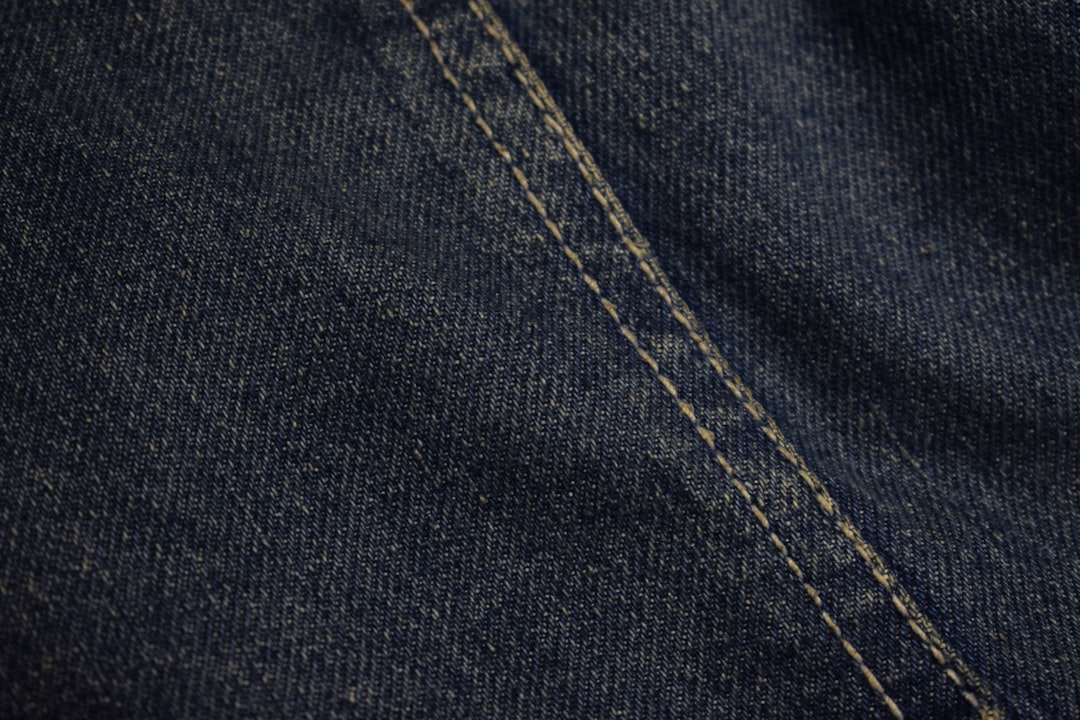
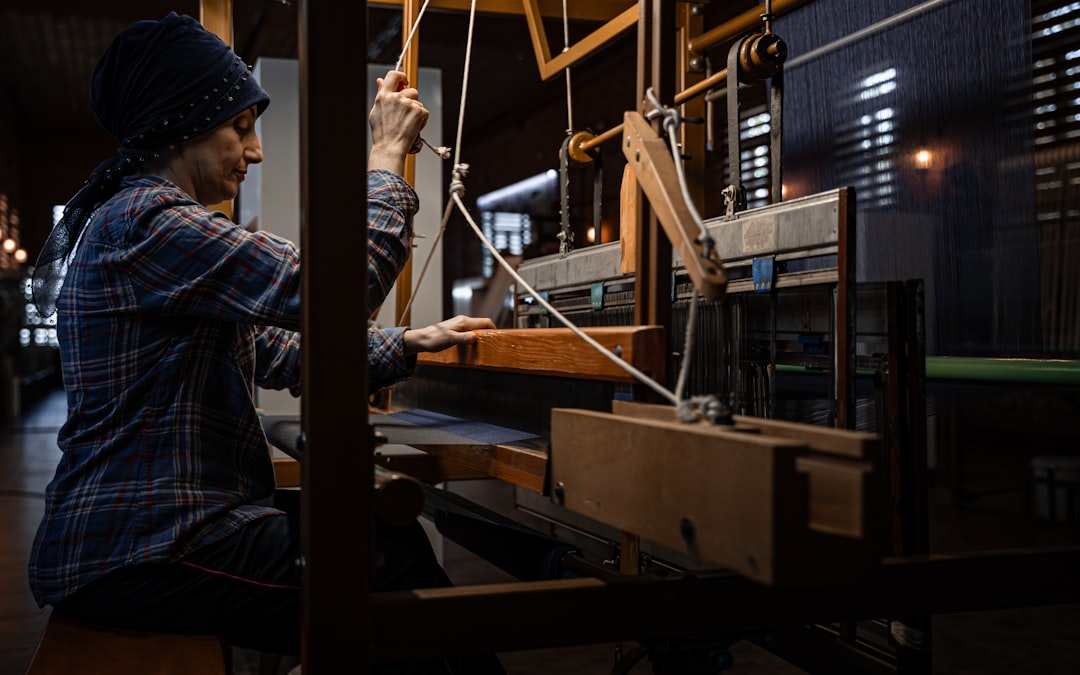
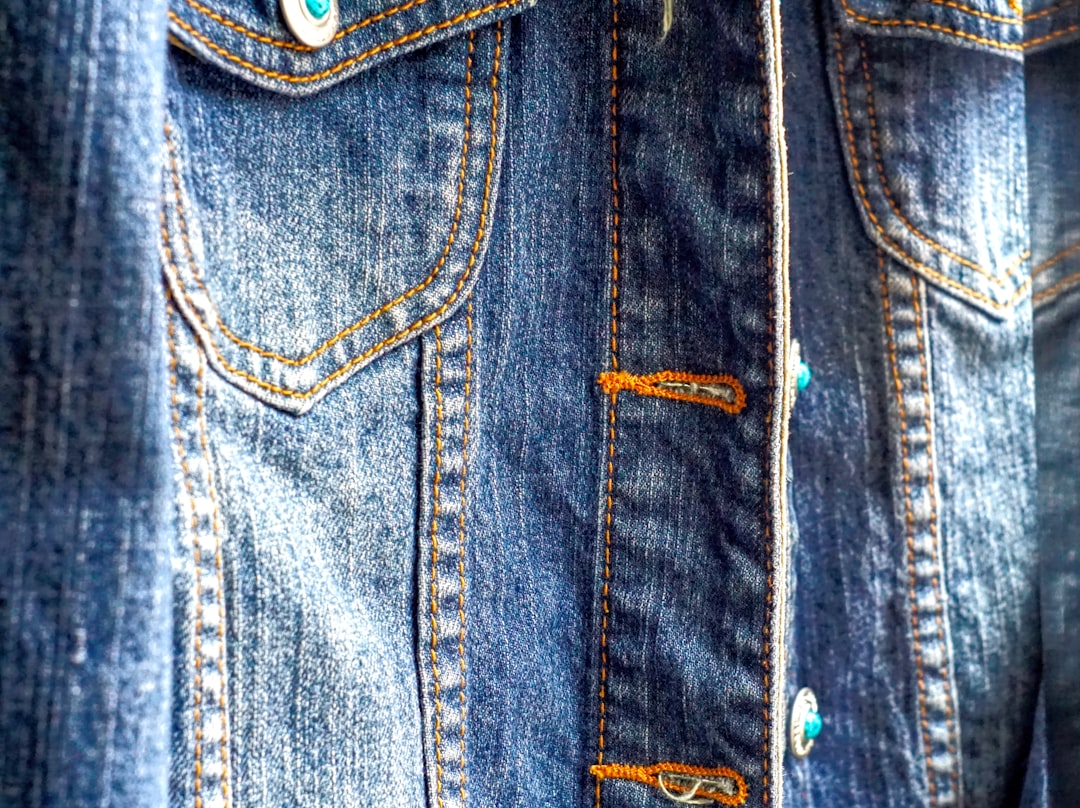
Selvedge: One of the defining features of the 501XX is its use of Selvedge denim woven on old-fashioned shuttle looms. This edge, known as the “ear,” is woven as a single thread to prevent fraying. The presence of a red line on the inside, known as Red Selvedge, is particularly prized as a mark of vintage denim. This Selvedge denim is now produced in only a limited number of factories, and its rarity is ever-increasing.
-
Hardware:
- Rivets: Initially, exposed copper rivets were used. However, around 1937, to address complaints that they scratched chairs and saddles, the rivets on the back pockets were changed to concealed rivets.
- Buttons: The top button often features an engraving of laurel leaves. The fly buttons are typically single-prong type. During World War II, rationing pushed Levi’s to substitute iron or copper-plated iron “donut” buttons for the usual brass hardware in order to conserve metal; surviving wartime pairs are found with both laurel-leaf-engraved and plain-faced versions, and the variation is itself a dating clue.
-
Stitching:
- Arcuate Stitching: The arched double lines on the back pockets are a Levi’s emblem and have been present since the patent acquisition in 1873. During World War II, for material conservation, there was a period when this stitching was temporarily replaced by painted lines, known as “paint stitching.”
- Chain Stitch: Chain Stitch is used for the hem. This creates a unique twist (roping) as the denim ages and washes, which is a key element of the vintage denim fading experience. Hems sewn with vintage machines like the Union Special 43200G, in particular, exhibit this twisting prominently.
-
Silhouette: Compared to modern jeans, early models have a more relaxed straight silhouette. However, it’s not just that they are baggy; they are Shrink-to-Fit (un-sanforized), meaning they shrink to fit the wearer’s body, creating a unique, personalized fit. This process of “cultivating” the jeans is one of the major attractions of the 501XX.
4. Authenticity and Dating (Vintage vs. Replica)
To distinguish genuine vintage Levi’s 501XX, several key points are crucial.
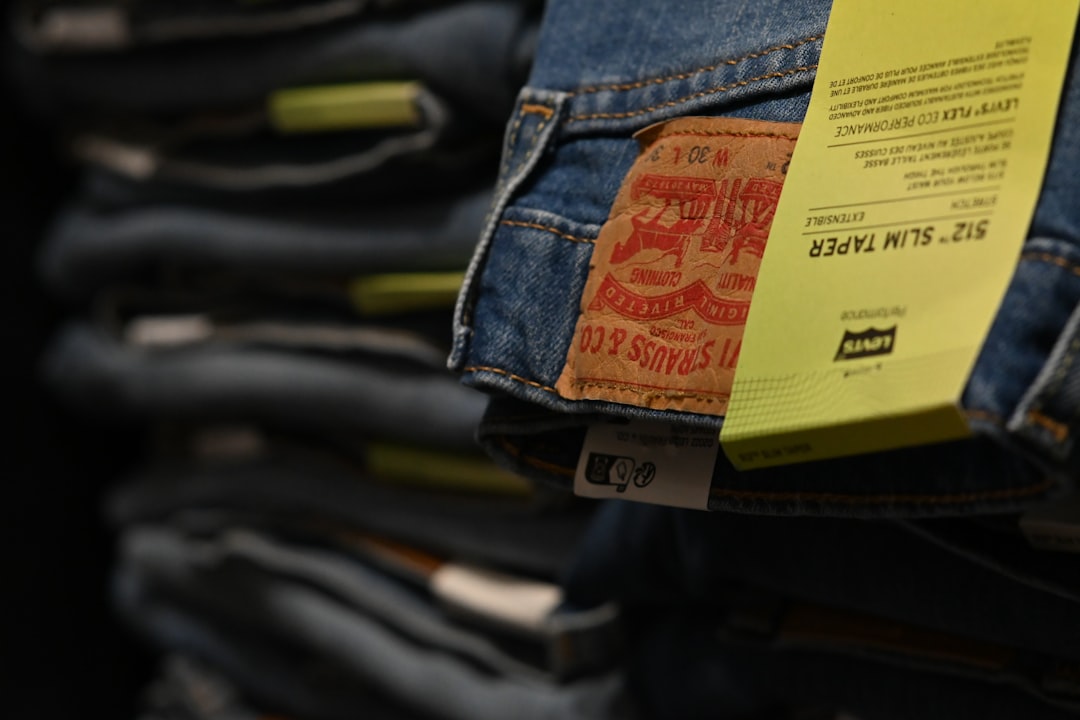
- Red Tab: Introduced in 1936, the Red Tab is one of the most important indicators for dating. Before 1971, it featured the “Big E” with “LEVI’S” in capital letters. After that, it changed to “Levi’s” with a lowercase “e.” Generally, “Big E” indicates models from before 1971 and commands particularly high prices in the vintage market.
- Patch: Early models featured a leather patch known as the “Two Horse Brand,” illustrating the strength of the denim by showing two horses unable to tear it apart. In 1955, Levi’s switched the leather patch to Jacron — a paper-based synthetic material — which remained the standard going forward.
- Rivets: Whether the back pocket rivets are concealed or exposed. Exposed rivets are characteristic of early models.
- Arcuate Stitching: Whether it’s painted or embroidered. Painted stitching is common on models from the WWII era.
- Cinch Back: Under the 1942 War Production Board L-85 order, the cinch back was progressively simplified and was dropped on the S501XX wartime model (1942–1945). Some postwar pairs briefly reintroduced it, but the 1947 specification revision retired it permanently — it has never returned to the 501 since.
- Copyright: From the late 1960s onwards, a copyright symbol ® appears on patches and care labels.
Replica brands strive to faithfully reproduce these details, but it is difficult to perfectly replicate the unique texture, stitching, and, most importantly, the “fabric’s expression” that comes from years of wear and washing. Deadstock (unworn) vintage items can be considered valuable historical artifacts in themselves.
5. Notable Figures and Cultural Appearances
The Levi’s 501XX has appeared on numerous celebrities and in films and music scenes, solidifying its cultural status.
- Film:
- “The Wild One” (1953) — Marlon Brando wearing the 501, the first clearly documented Levi’s-forward scene in Hollywood, cementing jeans as the uniform of the cinematic rebel.
- “Rebel Without a Cause” (1955) — James Dean’s own on-screen pair has been documented by multiple denim historians as Lee 101Z Riders, not Levi’s; however, Levi’s supplied the 400+ pairs worn by the film’s extras, and the cultural shockwave after release spread the “denim = youth rebellion” image across the entire jeans category, 501 included.
- Music:
- Many musicians during the rock and roll era favored jeans.
- In Japan’s street fashion and the American casual boom from the 1990s onwards, the 501XX was a central item.
These appearances played a role in elevating jeans from mere workwear to a means of self-expression and a symbol of rebellion.
6. Current Acquisition Channels (Vintage Market & Replica Brands)
Today, the primary ways to acquire genuine vintage Levi’s 501XX are as follows:
-
Vintage Market:
- Online Auctions: Platforms like eBay feature listings from collectors worldwide.
- Vintage Clothing Stores: Numerous specialty stores in Japan and abroad deal in vintage denim.
- Flea Markets & Antique Fairs: There’s a chance to find hidden gems, but it’s crucial to be able to identify condition and age.
- Caution: The vintage market is rife with fakes, replicas, and inaccurate dating. It is essential to purchase from reliable sellers.
-
Replica Brands:
- Levi’s Vintage Clothing (LVC): Levi’s own line faithfully reproduces past models. Models made with Selvedge denim from Cone Mills White Oak factory are particularly popular.
- Japanese Replica Brands: Brands like Warehouse, THE FLAT HEAD, and FULLCOUNT meticulously study the details and fabric textures of vintage denim, producing highly faithful replicas.
The closure of the Cone Mills White Oak factory at the end of 2017 signaled the end of Selvedge denim production in the United States, further increasing the rarity of vintage denim.
7. Conclusion
The Levi’s 501XX is more than just a pair of denim pants. It is the very history of denim spanning over 150 years, a symbol of the American spirit, and a canvas that has woven countless human stories. From its inception to the present day, the 501XX has consistently adapted to the times and evolved, yet it has never lost its core, universal appeal.
The reason it commands high prices in the vintage market and why replica brands pursue its details all stem from the 501XX’s unshakeable position as the “origin and pinnacle.” To engage with this pair is to open the door to the profound world of denim and to embark on the supreme experience of “cultivating” a pair that inscribes your own history. The Levi’s 501XX will undoubtedly continue to shine brilliantly in the annals of denim history.
Find Related Items
You can browse the models and items featured in this article at the stores below.
Related Articles
Levi's 507XX Type II: A Nine-Year Legend Forging the Evolution of Workwear
The Levi's 507XX Type II, a denim jacket that transcended workwear to become a fashion icon. This article delves into its origins, details, and enduring influence.

Levi's 506XX Type I: The Genesis of the Denim Jacket, Its Journey from 1936 to 1953
From its birth to evolutionary details, wartime changes, and cultural impact, a denim historian delves into the Levi's 506XX Type I jacket.

Beyond the 'Third': The Untold Evolution and Legend of Levi's 557XX Trucker Jacket
A deep dive into the history, design, cultural significance, and vintage market value of the Levi's 557XX (Type III) trucker jacket.