Levi's 505: The Evolution of the 501, Unveiling the Zipper-Fly Straight Jean
From its inception to the present day, this article delves into the history, construction, cultural impact, and vintage market value of the Levi's 505 from the perspective of a denim historian.
by editorial
This article contains affiliate links. We may earn a commission at no extra cost to you.
Levi’s 505: The Evolution of the 501, Unveiling the Zipper-Fly Straight Jean
Denim, as a material, transcends mere clothing; it serves as a mirror reflecting the zeitgeist and can become a cultural icon. Among these, Levi’s jeans have consistently held a central position in this profound narrative. And within its esteemed lineage, the “Levi’s 505,” which inherited the DNA of the 501 while charting its own evolutionary path, has etched a significant chapter in denim history. As a denim historian, this article will meticulously unravel the complete story of this zipper-fly straight jean, from its birth to the present, exploring its cultural significance, construction, and market value.
1. Introduction — Why This Garment is Culturally Significant
The cultural importance of the Levi’s 505 stems from its birth being intrinsically linked to the changes of its era. Launched in 1967, a year marked by the flourishing of counterculture known as the “Summer of Love,” the 505 infused Levi’s, which had a strong image as workwear, with a new, modern, and casual spirit that resonated with youth culture. The zipper fly, distinct from the classic button fly of the 501, and its slightly slimmer straight silhouette, were sensitive to the shifts in lifestyle and fashion consciousness of the time. The 505 is not merely a variation of jeans; it is a symbol of denim’s journey to firmly establish itself as a fashion item and a tool for youthful self-expression.
Shop the items featured in this article
【今だけ2%OFFセール】【日本製】リーバイス ビンテージ クロージング LEVI'S VINTAGE CLOTHING 501XX 1955モデル ジーンズ…View on Rakuten → 【今だけ2%OFFセール】【日本製】リーバイス ビンテージ クロージング LEVI'S VINTAGE CLOTHING 501 1937モデル 501XX…View on Rakuten →2. Historical Context — Birth Year and Brand Context
The Levi’s 505 was born in 1967. This marked a crucial turning point in the brand’s context, leveraging the trust Levi’s had cultivated over years as a workwear brand and its aggressive expansion into the casual wear market.
The 505 is often positioned as a “successor model” to the 501Z, which debuted in 1954. However, this is not entirely accurate. According to official Levi’s information and historical records, the 501Z was a “zipper-fly derivative of the 501” and was a separate lot that was sold concurrently with the 505. Both ran parallel during the same period, each catering to different needs.
The background to the 505’s launch as a new line was the changing youth culture and lifestyle of the time. There was a preference for the easier and more casual zipper fly over the button fly, and demand for a more refined, slim silhouette was growing. Levi’s, recognizing these trends, proposed a modern jean with an approach distinct from the existing 501.
It is noteworthy that the 505 was launched in the same year as the “Summer of Love.” Levi’s official LVC (Levi’s Vintage Clothing) also states, “505 was born in the Summer of Love,” making its birth in conjunction with counterculture particularly interesting when considering its subsequent cultural reception.
Furthermore, while some sources claim it was “Levi’s’ first zipper-fly jean,” this is an error. The 501Z debuted in 1954, predating it by 13 years. The true innovation of the 505 lies not in the zipper fly itself, but in being the first for Levi’s 5-pocket line to utilize pre-shrunk / sanforized denim. This provided the 505 with more stable sizing and comfortable wear compared to the 501’s “shrink-to-fit (STF)” nature, establishing its “modern, casual-oriented” positioning at the fabric level.
3. Construction Details — Selvedge, Hardware, Stitching, Silhouette
The allure of the Levi’s 505 lies in its craftsmanship hidden in the details and the evolution of its features over time.
1967-Early 1970s (Big E Period)
These early 505 models are highly sought after by vintage denim collectors.
- Tab: The characteristic feature is the “Big E” red tab, bearing the “Levi’s” logo. This is a rare detail that persisted until the switch to the “Small e” in 1971.
- Silhouette: Compared to the 501, it features a slightly slimmer straight silhouette, a design arguably intended for a more modern, urban look.
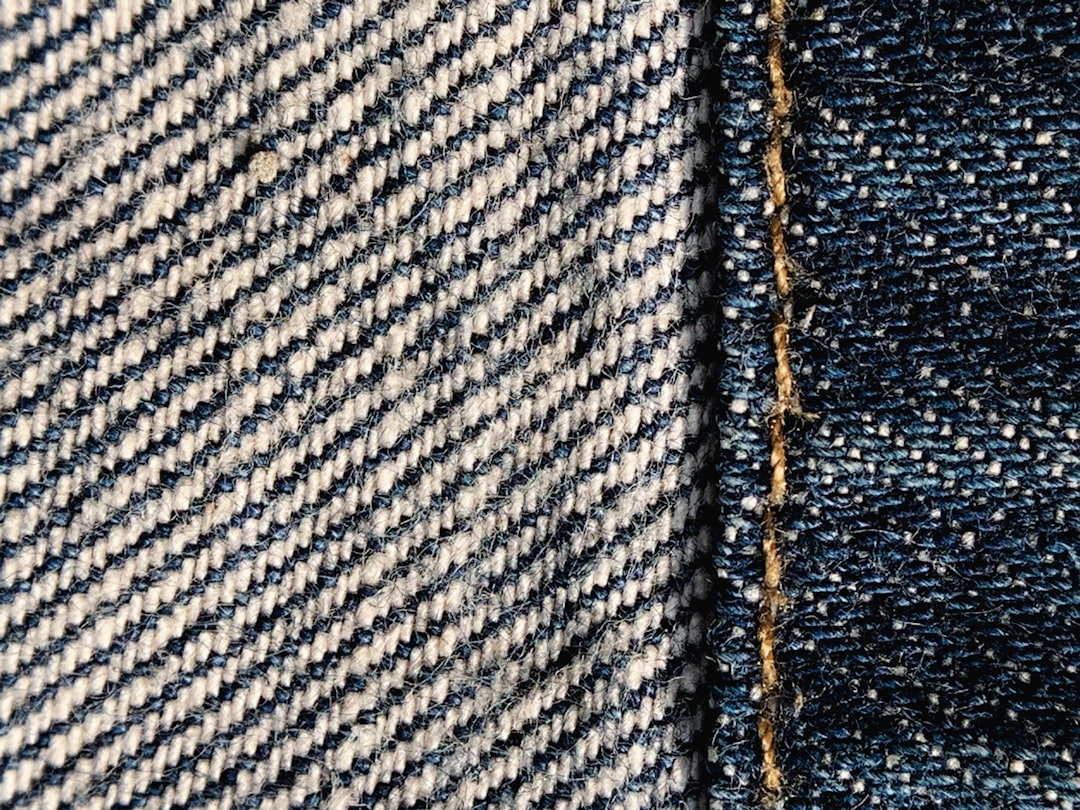
- Selvedge: Early models often used red-line selvedge denim, frequently from Cone Mills White Oak. This is a rare specification produced only on old-fashioned shuttle looms, woven so the fabric edge won’t fray.
- Patch: A paper patch (Jacron) was used. This material, also adopted by the 501 around 1955, gives a lighter, more casual impression than a leather patch.
- Hardware:
- Zipper: Talon zippers were used in early models.
- Rivets: Exposed copper rivets were abolished, and bar-tacks were used to reinforce the back pockets. This new reinforcement method, introduced to Levi’s jeans in 1966, provides a more refined appearance. While the 501XX transitioned from exposed copper rivets to hidden rivets and then X-tack before 1966, the 505 was already equipped with the X-tack specification upon its debut.
1971-1980s (Small e Period)
In 1971, Levi’s changed its brand identity, switching the tab logo from “Big E” to “Small e.” This change was also applied to the 505, and models from this period onward feature the “Small e” tab.
- Selvedge: Selvedge specifications were gradually phased out by the early 1980s. This was due to Levi’s transitioning its primary production from shuttle looms to more efficient projectile looms, better suited for mass production. While the Cone Mills White Oak plant operated until its closure in 2017, the production of red-line selvedge denim gradually declined. The exact year of this discontinuation is subject to debate and should not be definitively stated.
- Zipper: The zipper supplier transitioned from Talon to other manufacturers such as Scovill and YKK.
1990s Onward
From the 1990s onwards, the 505 further solidified its status as a fashion item. While past models are re-evaluated, it continues to be produced as a regular model. USA-made deadstock 505s hold particularly high value in the vintage market.
4. How to Identify Authenticity and Age (Vintage vs. Replica)
To distinguish vintage Levi’s 505 jeans, several points are key.
- Tab: “Big E” indicates pre-1971, while “Small e” suggests post-1971, providing a general guideline.
- Zipper: Early models feature Talon zippers. A switch to YKK or Scovill suggests a newer vintage.
- Rivets: Bar-tack (X-tack) reinforcement on the back pockets indicates a model from 1966 onwards.
- Patch: A paper patch (Jacron) is characteristic.
- Red Tab: The “Levi’s” lettering in red, and whether the “E” is uppercase (Big E) or lowercase (Small e).
- Selvedge: The presence of a red line on the fabric edge.
- Care Label: Care labels (washing instructions) began to be attached from the late 1970s onwards.
Many replica models exist, so it is important to consider these details comprehensively. Particularly, “Big E” era models are rare and counterfeits are prevalent, so caution is advised.
5. Notable Figures and Cultural Appearances
From its inception, the Levi’s 505 quickly became a symbol of counterculture and rebellion, appearing in various cultural scenes.
As its birth in the “Summer of Love” in 1967 suggests, the youth of the time resonated with the modern, casual image of the 505. Its more urban and sophisticated feel, distinct from the 501, likely matched their lifestyle.
Furthermore, by the late 1970s and early 1980s, the 505 became an indispensable item in the punk rock scene. The fact that many punk bands, including the Ramones, wore the 505 is confirmed by official Levi’s records, strongly associating them with the image of “rebels, outcasts, and misfits.” Their rough, straight silhouette became a symbol of DIY-spirited punk fashion.
6. Where to Find Them Today (Vintage Market & Replica Brands)
Today, there are two main ways to acquire Levi’s 505 jeans.
-
Vintage Market: “Big E” era models and USA-made deadstock 505s can be found on online auction sites, in used clothing stores, and in the vintage sections of select shops. Prices vary significantly based on condition, age, and rarity, but the encounter with a unique piece retaining its original character is a joy for denim enthusiasts. In particular, early models with selvedge specifications tend to command higher prices.
-
Replica Brands: Levi’s itself releases meticulously recreated reproductions of past models through its LVC (Levi’s Vintage Clothing) line. Additionally, various fashion brands produce and sell jeans inspired by or modeled after the 505. These offer an accessible option for enjoying the 505 style.
7. Conclusion
The Levi’s 505 transcends being merely a “zipper-fly version of the 501”; it embodies a unique evolution in denim history. Since its debut in 1967, it has consistently created new value while reflecting the spirit of each era, from counterculture and punk rock to contemporary fashion. Each detail—from the innovation of adopting pre-shrunk / sanforized processing, the transition from “Big E” to “Small e,” to the historical context of selvedge specifications—eloquently narrates the depth of denim as a material and the story accumulated by the Levi’s brand.
Whether you seek out its rare specimens in the vintage market or enjoy its style with modern replicas, the Levi’s 505 will continue to present us with the allure of denim and timeless, universal style.
Find Related Items
You can browse the models and items featured in this article at the stores below.
Related Articles

Levi's 507XX Type II: A Nine-Year Legend Forging the Evolution of Workwear
The Levi's 507XX Type II, a denim jacket that transcended workwear to become a fashion icon. This article delves into its origins, details, and enduring influence.

Levi's 506XX Type I: The Genesis of the Denim Jacket, Its Journey from 1936 to 1953
From its birth to evolutionary details, wartime changes, and cultural impact, a denim historian delves into the Levi's 506XX Type I jacket.

Beyond the 'Third': The Untold Evolution and Legend of Levi's 557XX Trucker Jacket
A deep dive into the history, design, cultural significance, and vintage market value of the Levi's 557XX (Type III) trucker jacket.